Understanding Building Survey Damp
Dampness in buildings presents significant challenges for property owners, affecting both structural integrity and occupant health. Identifying the source and type of moisture is crucial for effective remediation strategies that address the root cause rather than just the symptoms.
The Science of Dampness
Dampness occurs when excessive moisture penetrates or accumulates within building materials. This process is governed by several physical principles, including relative humidity, temperature differentials, and material porosity. When relative humidity exceeds 70%, conditions become favourable for mould growth and timber decay.
Water molecules move through building materials via capillary action, which allows moisture to travel upward through porous materials against gravity. This explains why dampness can appear well above ground level in affected structures.
Temperature plays a critical role in dampness manifestation. Cold surfaces can cause warm, moist air to condense, creating wet spots on walls and ceilings. This process, known as condensation, is particularly common in poorly insulated properties.
Diffusion occurs when water vapour moves from areas of high concentration to low concentration through seemingly solid materials. Even concrete and brick aren’t impervious to this phenomenon.
Types of Damp
Rising Damp occurs when ground moisture travels upward through walls via capillary action. Typically, it reaches heights of approximately 1.2 metres and often leaves a tidemark with white salt deposits.
Penetrating Damp results from water ingress through defects in the building envelope. Common culprits include damaged roofing, cracked pointing, and deteriorated window seals. This type can appear at any height within a property.
Condensation forms when moisture-laden air contacts cold surfaces. It’s often identified by black mould growth and is particularly prevalent in kitchens, bathrooms and poorly ventilated spaces.
Lateral Damp affects basement and below-ground structures where hydrostatic pressure forces water through walls. This requires specialised waterproofing solutions.
Building Pathology and Fabric
Building fabric deterioration often signals underlying damp issues. Peeling paint, crumbling plaster, and rotting timber are common indicators that warrant professional assessment. These symptoms reflect the building’s response to moisture imbalance.
Original construction methods significantly impact damp vulnerability. Solid walls without cavity insulation are more susceptible to dampness than modern cavity walls with damp-proof courses (DPCs).
Material compatibility is crucial for effective remediation. Breathable lime-based materials are preferable for older buildings, whereas cement-based products can trap moisture and exacerbate problems.
We should consider a building’s entire moisture ecosystem when addressing damp. Ventilation, heating patterns, exterior drainage and surrounding topography all contribute to the property’s moisture balance.
Proper diagnosis requires systematic investigation of building fabric, often using moisture meters, thermal imaging and salt analysis to distinguish between different types of damp.
Damp Proofing Solutions
Addressing damp problems requires targeted solutions that tackle the root causes rather than just treating symptoms. Effective remediation typically involves a combination of structural interventions, improved air circulation, and thermal performance enhancements.
Damp Proof Courses
A damp proof course (DPC) creates a moisture barrier within walls to prevent dampness from rising through the building structure. Traditional DPCs are physical barriers made of materials like slate or plastic installed during construction. For existing properties without effective DPCs, chemical injection is often employed.
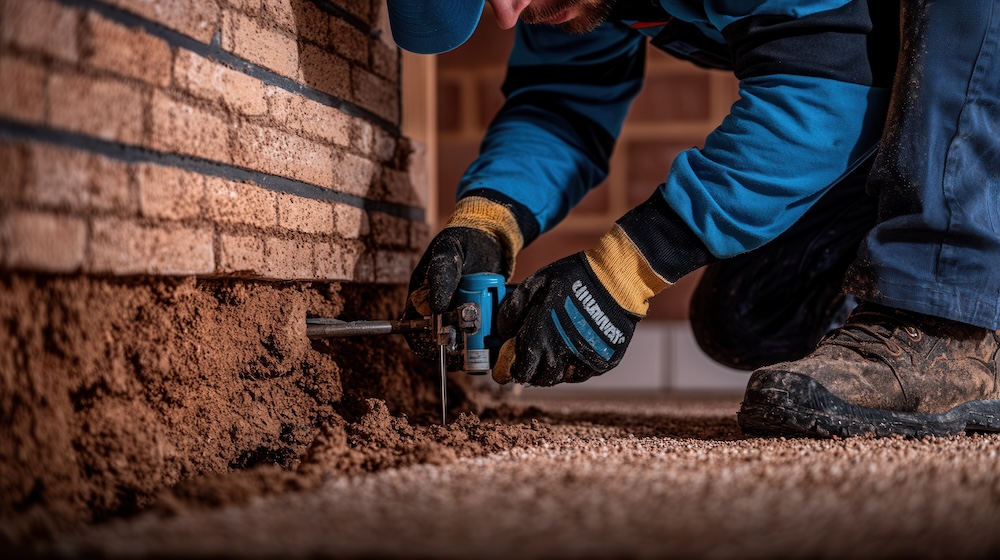
We recommend professional installation of chemical DPCs, where specialists drill holes at regular intervals near the base of affected walls. They then inject water-repellent chemicals that create a hydrophobic barrier.
For severe cases of rising damp, a complete DPC system might include replastering with salt-resistant materials to protect interior finishes. These treatments typically come with 20-30 year guarantees when installed by certified professionals.
Modern technologies have improved DPC effectiveness with silicone-based solutions offering better penetration and longevity than older methods.
Effective Ventilation
Proper ventilation is crucial for controlling condensation and preventing mould growth in properties. We often find that improved airflow alone can resolve minor damp issues without costly structural work.
Passive ventilation options include:
- Trickle vents in windows
- Air bricks in external walls
- Roof ventilation tiles
For bathrooms and kitchens, we recommend humidity-controlled extractor fans that activate automatically when moisture levels rise. These are particularly effective in areas where cooking or bathing creates significant water vapour.
Positive pressure ventilation systems can benefit entire properties by gently circulating fresh, filtered air throughout the building. These systems push stale, damp air out through natural leakage points in the building fabric.
Proper ventilation strategies must balance air quality with energy efficiency, especially during colder months.
Insulation and Energy Efficiency
Well-insulated buildings are less prone to condensation damp as they maintain more consistent internal temperatures and prevent cold spots. Improving thermal performance addresses dampness while reducing energy costs.
Cavity wall insulation, when correctly installed, helps maintain warmer internal wall surfaces. However, we caution against installing cavity insulation if there are existing penetrating damp issues, as this can exacerbate problems.
Loft insulation (minimum 270mm thickness) prevents heat loss while attic ventilation prevents moisture build-up. This combination is particularly important for preventing condensation in roof spaces.
Internal wall insulation options include thermal boards with vapour barriers that can be effective remedies for cold, damp walls. These systems require careful installation to avoid creating thermal bridges that could lead to localised condensation.
Energy-efficient heating systems help maintain ambient temperatures above dew point, thereby reducing condensation risk throughout the property.
Comprehensive Damp Surveys
Professional damp surveys require thorough methodology, accurate moisture readings, and detailed reporting to identify the true causes of dampness in buildings. These elements work together to provide property owners with actionable information about moisture problems.
Survey Methodology
We begin our comprehensive damp surveys by examining the exterior of the property. This initial assessment helps identify potential external factors contributing to internal damp issues, such as faulty guttering, cracked render, or inadequate drainage.
Once inside, we conduct a methodical room-by-room inspection. We look for visible signs of dampness including discoloration, peeling wallpaper, damaged plaster, and mould growth.
Our surveyors use both visual assessment and technical equipment during the inspection. This dual approach ensures we don’t miss hidden moisture problems behind walls or under floors.
We also consider the building’s age, construction methods, and any previous damp treatments. Understanding the property’s history helps distinguish between normal moisture levels in older buildings and genuine damp problems requiring intervention.
Interpreting Moisture Meter Readings
Moisture meters are essential tools in our damp survey arsenal. We use both surface and deep-reading meters to detect elevated moisture levels within building materials.
Different building materials have varying normal moisture content levels. For instance, a 12% reading might be acceptable in some materials but concerning in others. Our experienced surveyors understand these nuances.
Types of Moisture Meters Used:
- Surface capacitance meters (non-invasive)
- Pin-type resistance meters (slightly invasive)
- Deep-wall probes (for subsurface readings)
Readings must be taken at multiple heights and locations to map the moisture pattern. Rising damp typically shows decreasing moisture levels with height, while condensation patterns differ significantly.
We always take baseline readings from unaffected areas for comparison. This contextualises our findings and helps differentiate between structural damp issues and localised moisture incidents.
Damp Survey Reporting
Our written reports provide clear, actionable information about damp conditions found during the survey. Each report includes a detailed assessment of the property’s moisture status and identified causes of dampness.
Reports contain photographic evidence of problem areas with corresponding moisture meter readings. This visual documentation helps clients understand the extent and location of issues.
We include diagrams showing moisture patterns throughout the property. These visual representations make complex damp pathways easier to understand than text descriptions alone.
Every report concludes with specific recommendations for remediation, prioritised by urgency. Where appropriate, we suggest multiple treatment options with their respective advantages and limitations.
We avoid technical jargon where possible, ensuring our reports are accessible to homeowners whilst still providing the technical detail required by building professionals and contractors who may undertake remedial work.
Repair and Treatment
Once damp issues are identified in your property, the next crucial step is implementing effective repair and treatment solutions. Proper treatments not only address current problems but also help prevent future occurrences of dampness and structural damage.
Timber Treatments
Timber affected by damp often requires specialised treatment to prevent further deterioration. We recommend professional timber treatments that include fungicidal applications to combat wet rot and dry rot infestations. These treatments typically involve removing affected wood where necessary and applying preservatives to remaining timber.
For severe cases, timber replacement may be unavoidable. Modern timber treatments utilise advanced formulations that provide long-lasting protection against fungal growth.
Timber treatments should extend beyond visibly affected areas to create protective zones around the damaged sections. This preventative approach helps safeguard adjacent timber from future infestations.
Damp Treatments
Different types of damp require specific treatment approaches. For rising damp, installation of a new damp-proof course (DPC) is often necessary, which may involve chemical injection or physical DPC systems.
Penetrating damp typically requires external repairs to prevent water ingress. This might include repointing brickwork, repairing roof tiles, or fixing faulty guttering and downpipes.
For condensation issues, improved ventilation systems, such as extractor fans or air bricks, can make a significant difference. In some cases, thermal insulation upgrades help keep the building’s fabric above the thermal dew point.
Treatment costs vary based on property size and damp severity. A standard damp treatment for a 3-bed terraced house might cost between £400-£800 in 2025.
Repair Guarantees and Certifications
Quality damp treatment companies provide long-term guarantees for their work, typically ranging from 10-30 years. These guarantees offer peace of mind and may be transferable to new owners if you sell your property.
We always advise checking that repair specialists hold relevant industry certifications and insurance. Reputable companies should be members of organisations like the Property Care Association (PCA).
Proper documentation of all repairs and treatments is essential, particularly for mortgage or insurance purposes. This documentation should include detailed descriptions of work completed, materials used, and guarantee certificates.
When choosing a company for damp repairs, prioritise those with substantial experience and positive customer reviews rather than selecting solely based on price.
The Importance of Specialist Surveyors
Identifying and addressing damp issues in buildings requires specialised knowledge that goes beyond general building surveys. Specialist surveyors bring crucial expertise that helps property owners understand the true causes of moisture problems and implement appropriate solutions.
PCA Registered Professionals
When dealing with damp issues, working with surveyors registered with the Property Care Association (PCA) offers significant advantages. PCA registered professionals adhere to strict industry standards and undergo regular training to stay updated on the latest techniques and solutions for moisture problems.
These surveyors follow established protocols that ensure thorough inspection and accurate diagnosis. The PCA provides a code of practice that members must follow, giving property owners assurance of quality service.
We’ve found that PCA affiliated surveyors typically provide more comprehensive reports that include detailed remediation recommendations. Their membership also indicates they have access to industry research and specialised equipment that general building surveyors might not possess.
Specialised Timber and Damp Surveys
A specialist timber and damp survey differs significantly from standard building inspections. These focused assessments examine moisture patterns, identify fungal decay, and detect potential insect infestations that can compromise structural integrity.
Specialists use moisture meters, thermal imaging cameras and other advanced equipment to identify damp that might be invisible to the naked eye. This technology allows for more precise identification of moisture sources and affected areas.
The detailed analysis provided in these surveys helps differentiate between condensation, rising damp, penetrating damp and other moisture problems. Each type requires different treatment approaches, making accurate identification essential for effective remediation.
Avoiding Misdiagnosis
Misdiagnosis of damp issues remains one of the most costly errors in property maintenance. General surveyors without specialist training often recommend unnecessary and expensive treatments that fail to address the root cause.
For example, condensation problems might be incorrectly identified as rising damp, leading to inappropriate damp proof course installations. These treatments can be expensive and ineffective when the actual issue lies with ventilation or insulation.
Specialist surveyors are trained to distinguish between different types of damp through careful analysis of distribution patterns, environmental factors and building materials. Their expertise helps avoid the common pitfall of treating symptoms rather than causes.
We’ve seen numerous cases where proper specialist assessment has saved property owners thousands of pounds by identifying simple solutions to problems that other surveyors had recommended extensive treatments for.
Health Implications and Building Defects
Damp and mould in buildings create significant health hazards while simultaneously damaging building integrity. These issues often interconnect, with building defects leading to moisture problems that subsequently impact occupant wellbeing.
Mould and Respiratory Issues
Exposure to damp and mould significantly increases respiratory health risks. Research shows strong links between mould presence and asthma development, particularly in children and elderly individuals.
Mould spores release allergens, irritants, and sometimes toxic substances that can trigger respiratory conditions. Common symptoms include:
- Wheezing and coughing
- Throat irritation
- Nasal congestion
- Eye irritation
- Skin rashes
In severe cases, prolonged exposure may lead to chronic respiratory conditions. RICS surveyors note that 91% of healthy dwellings were found to be dry without displaying clear defects, highlighting how proper building maintenance prevents these health issues.
The NHS recommends immediate remediation of mould problems, as untreated mould can cause progressive damage to both buildings and human health.
Fuel Poverty and Dampness
Fuel poverty creates a dangerous cycle with damp problems. When households cannot afford adequate heating, cold conditions promote condensation on walls and surfaces.
This moisture accumulation leads to damp and eventual mould growth. Many vulnerable families face difficult choices between heating and other essentials, exacerbating health risks. Energy inefficiency in buildings worsens this problem, as poorly insulated properties cost more to heat properly.
We’ve observed that homes with insufficient heating often display characteristic damp patterns, particularly on north-facing walls. Cold bridging occurs where heat escapes through structural elements, creating ideal conditions for condensation and mould growth.
Improving energy efficiency through proper insulation and ventilation breaks this cycle, simultaneously addressing fuel poverty and damp issues.
Identifying Common Building Defects
Building defects that contribute to damp problems include both structural issues and maintenance failures. Identifying these early prevents both property damage and health complications.
Common structural defects include:
- Rising damp from failed or missing damp-proof courses
- Penetrating damp from damaged external walls
- Leaking roofs or damaged guttering
- Insufficient ventilation in bathrooms and kitchens
- Poorly sealed window and door frames
During property inspections, we examine these high-risk areas thoroughly. A qualified damp surveyor conducts an “exhaustive evaluation” to detect moisture-related issues using both visual assessment and specialised equipment like moisture meters.
Building pathology reveals how apparently minor defects can cascade into serious problems. For example, a small roof leak can eventually compromise structural timbers, create electrical hazards, and establish ideal conditions for extensive mould growth.
After the Survey: Making Recommendations
Once a damp survey has been completed, clear recommendations are essential for homeowners to address the issues properly. A comprehensive report should outline both immediate actions and preventative measures to protect the property’s value and habitability.
Remedial Action Steps
The survey report should provide detailed advice on how to tackle the identified damp problems. If rising damp is discovered, a chemical damp-proof course injection may be recommended, followed by replastering with sand and cement. This treatment typically costs between £70-£100 per metre.
For penetrating damp, repairs might involve fixing damaged guttering, repointing brickwork, or addressing damaged roof tiles. These repairs are crucial before any internal decorative work begins.
Condensation issues often require improved ventilation systems. We recommend installing extractor fans in kitchens and bathrooms, with costs ranging from £150-£300 per unit depending on complexity.
It’s worth noting that mortgage lenders may require proof that damp issues have been addressed before releasing funds, so keeping documentation of all remedial work is essential.
Long-Term Maintenance Strategies
Implementing a regular maintenance programme helps prevent the recurrence of damp issues. We suggest quarterly checks of gutters and downpipes, especially during autumn when leaves can cause blockages.
Proper ventilation is key to preventing condensation. Consider using dehumidifiers in problem areas and ensuring trickle vents on windows remain unobstructed.
For properties with historical damp problems, annual inspections by qualified surveyors can identify potential issues before they worsen. This proactive approach typically costs £150-£200 but saves thousands in potential damage.
Weather-resistant paint on external walls provides added protection against penetrating damp. Products with silicone additives create a water-repellent barrier while allowing the wall to breathe naturally.
Building insurance policies should be reviewed to ensure they cover damp-related damage, particularly in high-risk areas with extreme weather conditions.
Understanding External Factors
External factors play a critical role in the development of damp issues in buildings. When conducting a building survey for damp, surveyors must thoroughly examine how outside elements interact with the property’s structure. These interactions often determine whether moisture will penetrate the building envelope.
Effects of Masonry Walls
Masonry walls are particularly vulnerable to damp issues due to their porous nature. Brick, stone, and concrete can absorb moisture from rainfall and ground water, allowing it to migrate through the wall structure. We often find that older properties with solid masonry walls lacking a damp-proof course (DPC) are especially susceptible to penetrating damp.
Damaged pointing between bricks can create entry points for moisture. Even small cracks or deterioration in mortar joints can allow significant water ingress during heavy rainfall.
Porous brick types may also absorb more moisture than dense engineering bricks. When surveying masonry walls, we look for tell-tale signs such as:
- Moss or algae growth on external surfaces
- Crumbling mortar joints
- Spalling brickwork (where the face of bricks flakes off)
- Efflorescence (white salt deposits on walls)
Roof Spaces and Condensation
Roof spaces frequently contribute to damp problems through inadequate ventilation and insulation issues. When warm, moist air from living spaces rises into colder roof voids, condensation can form on timber rafters and underside roof coverings.
Poor roof maintenance permits direct water ingress. Missing or damaged tiles, deteriorated flashing around chimneys, and blocked gutters all compromise the roof’s ability to protect against moisture penetration.
We examine how insulation is installed in loft spaces, as improper installation can block essential ventilation paths. Properly fitted roof ventilation is crucial, particularly in modern, well-insulated homes where natural air movement may be restricted.
Common roof space issues include:
- Black mould on timber surfaces
- Damp patches on ceiling joists
- Condensation on the underside of roof membranes
- Water staining on chimney breasts extending into the loft
Environmental Conditions and Damp
The surrounding environment significantly impacts a property’s susceptibility to damp. Buildings in exposed coastal locations face additional challenges from driving rain and salt-laden air, which can accelerate masonry deterioration and moisture penetration.
High water tables in certain geographical areas increase the risk of rising damp. Properties built on sloping sites may experience additional ground water pressure against foundations and lower walls.
Vegetation growing against external walls prevents proper surface evaporation. Ivy, climbing plants, and even overgrown garden beds can trap moisture against masonry surfaces, contributing to persistent damp problems.
Neighbouring properties can also affect damp conditions. Leaking gutters or drainage issues from adjacent buildings might direct water toward shared walls. In the damp industry, we recognise that comprehensive surveys must consider these environmental factors alongside internal conditions for accurate diagnosis.
Frequently Asked Questions
Damp survey costs typically range from £200 to £500 depending on property size and location. For standard residential properties, you can expect to pay around £250-£350 for a comprehensive assessment.
The price often increases for larger properties or those with complex layouts requiring more extensive investigation. Some companies offer basic moisture assessments for as little as £150, but these may not include the detailed analysis needed for accurate diagnosis.
Additional testing, such as sample analysis for specific mould types or comprehensive moisture mapping, may incur extra charges beyond the base survey fee.
A reputable damp surveyor should hold qualifications from recognised industry bodies such as the Property Care Association (PCA) or the Royal Institute of Chartered Surveyors (RICS). These credentials demonstrate a standardised level of expertise and knowledge.
Look for surveyors with CSRT (Certificated Surveyor in Remedial Treatment) or CSSW (Certificated Surveyor in Structural Waterproofing) qualifications. These specialised certifications indicate advanced training in damp issues.
Professional experience is equally important—surveyors with 5+ years of field experience typically provide more accurate diagnoses and practical recommendations for remediation.
A comprehensive damp survey includes inspection of all accessible internal and external areas where moisture problems commonly occur. Surveyors examine walls, floors, ceilings, roof spaces, and basements for signs of dampness.
The assessment typically covers identification of all damp types including rising damp, penetrating damp, condensation issues, and water ingress. Surveyors will also investigate associated problems such as timber decay, mould growth, and salt contamination.
Most thorough surveys include moisture mapping of affected areas, identification of root causes, and detailed recommendations for appropriate remedial actions with estimated costs.
Yes, investing in a specialised damp survey before property purchase is highly advisable, particularly for older buildings. General home surveys often don’t provide the detailed moisture analysis needed to identify potential serious issues.
Damp problems can be expensive to remedy, with costs potentially running into thousands of pounds for severe cases. The relatively modest cost of a specialist survey provides valuable leverage during purchase negotiations if problems are discovered.
Such surveys offer peace of mind and help prevent the unpleasant surprise of discovering significant damp issues after completing a property purchase.
Professional surveyors use both visual inspection and electronic moisture meters to detect elevated moisture levels within building materials. These electronic devices provide quantifiable measurements rather than just subjective assessments.
Thermal imaging cameras may be employed to identify temperature variations that indicate hidden moisture problems behind surfaces. This non-invasive technology can detect damp areas not visible to the naked eye.
In some cases, surveyors take material samples for laboratory analysis to identify specific salts or biological growth. Hygrometers are also used to measure ambient humidity levels and identify potential condensation risks.
Clear access to all areas of concern helps surveyors conduct a thorough assessment. Remove furniture, stored items, and fixtures that might obstruct walls, floors, or other surfaces requiring inspection.
Avoid cleaning or painting over damp patches or mould growth before the survey, as this can mask important evidence. Similarly, try not to use dehumidifiers for 24-48 hours prior to the inspection as this temporarily alters the moisture conditions.
Gather information about any previous damp treatments, building works, or historical issues to share with the surveyor, as this context can be valuable for accurate diagnosis.